


If you’ve heard kids randomly shout “6-7!”, seen it spammed in TikTok comments, or watched students burst into laughter when a teacher says the number 67, you’re not alone. Parents, teachers, and even the internet itself are asking the same question:
What does 6-7 actually mean?
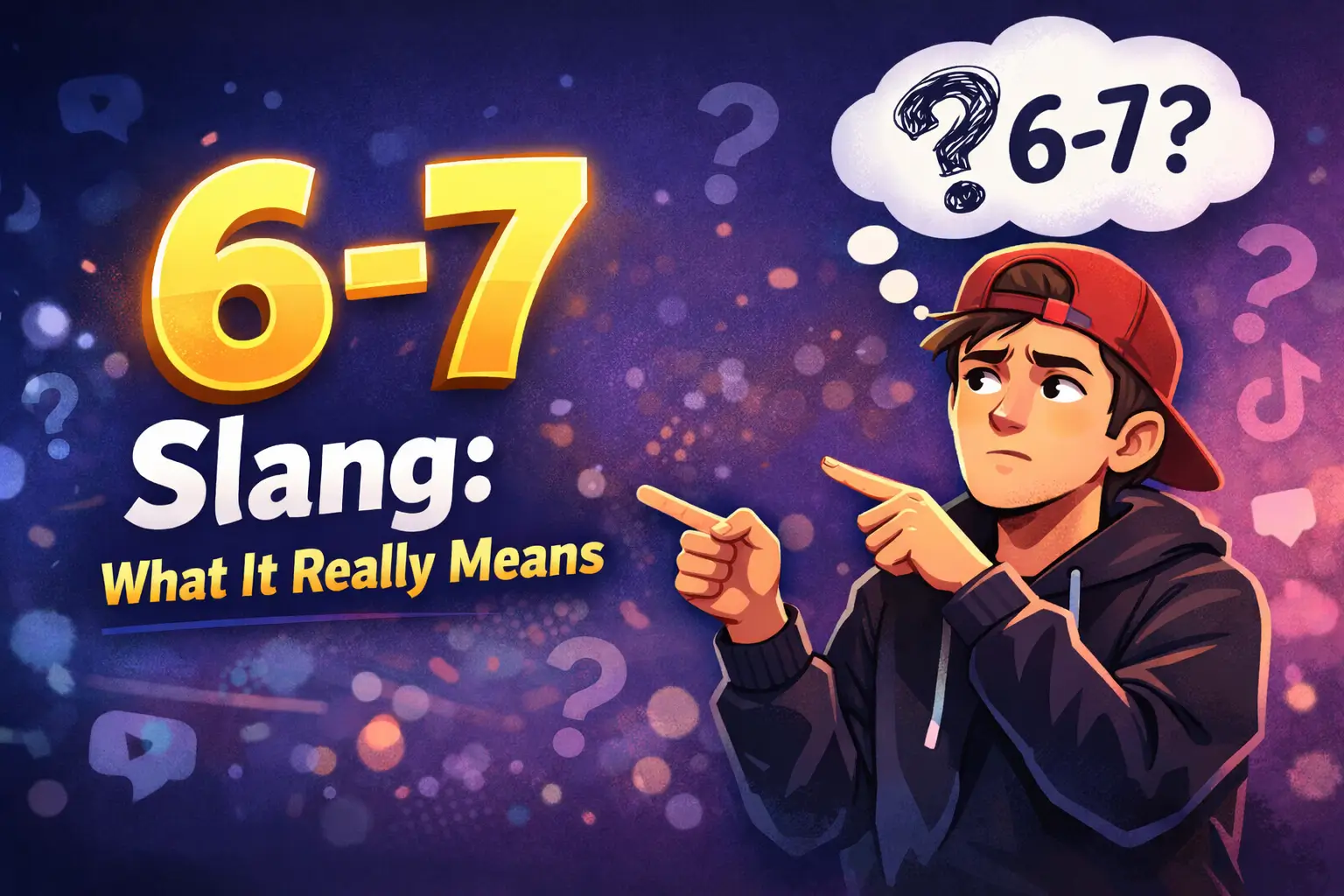
Short answer: it doesn’t really mean anything, and that’s exactly why it went viral.
This strange little number combo has become one of the most confusing slang trends of the internet age, spreading fast across TikTok, classrooms, and group chats. Let’s break it down in a way that actually makes sense.
What Does “6-7” Mean in Slang?
In slang terms, “6-7” has no fixed or literal meaning.
It’s a nonsensical internet phrase used mostly by kids and teenagers as:
- A random interjection
- An inside joke
- A way to confuse adults
- A signal that someone is “in the know”
If you’re looking for a dictionary-style definition, there isn’t one. The phrase works socially, not logically.
Think of it as vibe-based slang, if you get it, you get it. If you don’t, that’s kind of the point.
Where Did 6-7 Come From?
The “6-7” trend traces back to late 2024, when a rap song called “Doot Doot (6 7)” by Philadelphia rapper Skrilla started circulating online.
The phrase truly exploded when:
- TikTok users began pairing the audio with NBA clips
- Videos featured LaMelo Ball, who is 6 feet 7 inches tall
- A viral clip showed a kid repeatedly yelling “6-7!” with a distinct hand motion
That child, now nicknamed the “67 Kid”, unintentionally turned the phrase into a full-blown meme.
The TikTok Effect: How 6-7 Went Viral
TikTok played a massive role in pushing “6-7” into mainstream slang.
On TikTok, users:
- Drop “6-7” in comments for no reason
- Shout it when they hear the numbers six and seven together
- Use it in videos purely for shock value and randomness
TikTok slang thrives on absurdity, and “6-7” fits perfectly into the platform’s culture of brain-rot humor, short, meaningless phrases that are funny because they don’t make sense.
How People Actually Use “6-7”?
Even though it has no meaning, “6-7” is used in a few recognizable ways:
1. Random Shouting
Someone mentions page 67, a 67% score, or the number combo, boom:
“6-7! 6-7!”
2. With a Hand Gesture
Many people pair it with a weird up-and-down open-palm motion, like weighing two invisible objects.
3. To Annoy or Troll Adults
A big part of the fun is watching teachers or parents ask:
“What does that even mean?”
4. As an Inside Joke
Saying “6-7” is a way to show you’re part of the same online culture.
Why Does 6-7 Mean Nothing (On Purpose)?
According to linguistics experts, language isn’t just about sharing information, it’s also about belonging.
“6-7” works because:
- It connects insiders
- It locks outsiders out
- It creates a shared joke with no explanation
Kids aren’t using it to communicate facts. They’re using it to communicate identity.
If adults are confused and Googling it, the slang has already succeeded.
Is 6-7 Inappropriate or Dangerous?
Despite some wild online theories, “6-7” is mostly harmless.
There is:
- ❌ No confirmed hidden violent meaning
- ❌ No coded message about crime or hate
- ❌ No universal adult interpretation
For most users, it’s just silly, chaotic slang, far tamer than many viral phrases before it.
Why Adults Don’t Find It Funny?
Here’s the thing:
“6-7” isn’t meant to be funny to adults.
Slang like this exists specifically to:
- Separate generations
- Create youth-only culture
- Mock the idea that everything needs meaning
The confusion is the joke.
How Long Will the 6-7 Trend Last?
Probably not long.
Language experts suggest trends like this fade quickly because:
- They lack practical use
- They rely on novelty
- Once adults fully understand them, they lose power
Some slang words stick around for decades. Others, like “6-7”, burn bright and disappear.
What Does “Sitting on 6s and 7s” Mean?
The phrase “sitting on sixes and sevens” is an idiom used to describe a situation where someone feels uneasy, unsettled, or mentally restless, often because things are uncertain or out of control. When a person is “on 6s and 7s,” they are not relaxed or stable, they’re waiting, worrying, or unsure about what will happen next. Unlike modern slang, this expression comes from older English usage and is still common in everyday conversation.
Example:
After sending the job interview follow-up email, she spent the whole weekend sitting on sixes and sevens, constantly checking her phone for a response.
Final Thoughts
At the end of the day:
“6-7” means nothing, and everything at the same time.
It’s:
- A TikTok slang trend
- A youth inside joke
- A social signal
- A reminder that language isn’t always logical
If you’re confused by it, congratulations, you’ve just experienced exactly what the phrase was designed to do.
Frequently Asked Questions
Q: Is 6-7 real slang?
Yes, but it’s slang without a definition.
Q: Does 6-7 stand for something hidden?
No reliable evidence suggests that.
Q: Why do kids keep saying it?
Because it’s random, viral, and unexplainable.
Q: Will it disappear?
Most likely, yes.
