How AI Image Generation Is Changing Digital Creativity
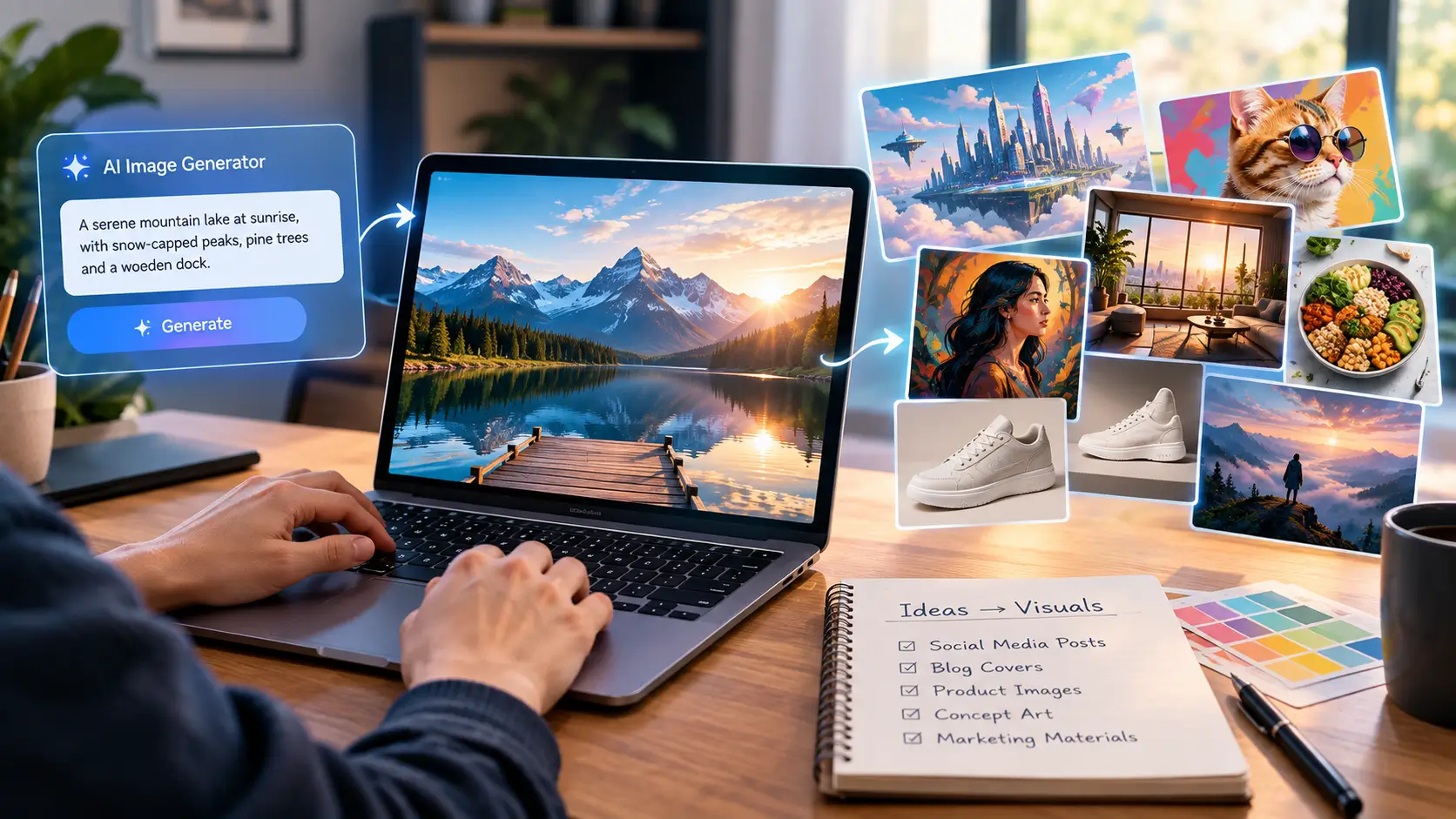
Creating high-quality visual content used to require a combination of design knowledge, specialized software, and considerable time. Today, artificial intelligence is changing that process. AI-powered image generation tools can turn written descriptions into illustrations, concept art, social media graphics, product visuals, and other forms of digital content in a matter of moments.
This shift is not simply about producing images faster. It is also changing how people approach visual ideas, experiment with creative concepts, and communicate information online.
What Is AI Image Generation?
AI image generation uses machine-learning models to create or modify visual content based on instructions provided by a user. These instructions, often called prompts, can describe subjects, environments, artistic styles, lighting, composition, colors, or other visual characteristics.
For example, a user might describe a futuristic city at sunset with glass skyscrapers, flying vehicles, and cinematic lighting. Instead of manually constructing the scene, an AI model can interpret those instructions and generate an image based on the description.
Modern systems have become increasingly capable of understanding relationships between different elements in a prompt. This makes them useful not only for experimentation but also for practical creative workflows.
Why AI Image Tools Are Becoming Popular
One of the biggest advantages of AI image generation is accessibility. Traditional image editing and design software can have a steep learning curve, particularly for people who do not work with visual content regularly. AI tools allow users to begin with a simple written idea rather than a fully developed design.
Speed is another important factor. A designer might need several variations of a concept before deciding which direction works best. Generative AI can produce multiple possibilities quickly, making the early stages of creative development more flexible.
For marketers, bloggers, educators, and small businesses, this can also make visual experimentation more practical. Instead of abandoning an idea because producing the necessary artwork would take too much time, users can explore different concepts and refine them as they go.
For creators looking to experiment with text-based visual creation, an AI image generator can provide a convenient starting point for turning written ideas into visual concepts.
The Importance of Good Prompts
Although AI image generators can automate much of the production process, the quality of the instructions still matters. A vague prompt may produce an interesting image, but a detailed description generally gives the model more useful information to work with.
A strong prompt can specify:
- The main subject of the image
- The setting or background
- The desired visual style
- Lighting and atmosphere
- Camera perspective or composition
- Colors and important visual details
- The intended mood or purpose
For example, instead of asking for “a futuristic office,” a user could describe a minimalist workspace with floor-to-ceiling windows, natural morning light, modern furniture, indoor plants, and a clean architectural style.
This approach gives the AI more creative direction while still leaving room for interpretation.
AI Image Generation in Content Creation
Digital publishers increasingly depend on visual content to make articles, social posts, presentations, and marketing materials more engaging. AI-generated imagery can support these workflows by helping creators develop visuals that match a particular topic or concept.
A technology blog, for instance, might use AI-generated illustrations to explain an emerging computing concept. A travel website could create conceptual imagery for destinations before commissioning photography. A social media creator might experiment with several visual themes before choosing a final design.
AI image generation can therefore function as part of a broader creative workflow rather than replacing every traditional design process.
Combining AI With Human Creativity
The most useful way to think about generative AI is as a creative assistant rather than an automatic replacement for human judgment.
AI can quickly produce ideas, variations, and visual starting points, but people still need to decide whether an image communicates the intended message. Composition, relevance, branding, accuracy, and audience expectations remain important considerations.
Human involvement is particularly valuable when visual content needs to represent a real person, product, organization, or event accurately. AI-generated imagery can introduce unexpected details, so important materials should always be reviewed before publication.
Newer Models and More Detailed Visual Work
The development of newer image-generation models has also expanded what users can expect from text-to-image systems. Improvements in prompt interpretation, image quality, composition, and the handling of complex scenes allow creators to experiment with increasingly sophisticated ideas.
For people interested in exploring newer approaches, a GPT Image 2.5 AI image generator can be another option to consider when experimenting with prompt-based visual creation and different types of AI-assisted imagery.
The broader trend is toward tools that make image creation more interactive. Instead of treating generation as a one-time process, users can increasingly create an image, identify what needs to change, and continue refining the concept.
Practical Uses Beyond Art
AI-generated images are not limited to artistic projects. They can also support practical communication.
Businesses can use generated visuals for brainstorming product concepts. Educators can create illustrations to support lessons. Developers can visualize early interface ideas. Writers can explore settings and characters for fictional projects. Researchers and presenters can use conceptual visuals when an appropriate real-world photograph does not exist.
The technology can also help with ideation. Even when the final image is ultimately produced by a professional designer or photographer, AI-generated concepts can provide a starting point for discussion.
Responsible Use Still Matters
The growing accessibility of AI image generation also creates new questions around authenticity, copyright, consent, and misleading imagery.
Users should be careful when generating images that could be mistaken for real photographs, particularly when they involve public events, identifiable individuals, or sensitive subjects. Images used commercially should also be reviewed according to the relevant platform’s terms and applicable laws.
Responsible use means understanding that technical ability does not automatically make every possible use appropriate. Context and transparency remain important as synthetic media becomes harder to distinguish from traditionally produced content.
The Future of AI-Assisted Visual Creativity
AI image generation is developing into a broader creative technology rather than remaining a novelty. As models become better at understanding language and visual context, the process of moving from an idea to a usable visual will likely become increasingly accessible.
The biggest change may be the reduction of the gap between having a creative idea and being able to visualize it. People who previously lacked advanced design skills can now experiment with concepts that would once have required specialized expertise.
At the same time, professional creators can use these systems for brainstorming, prototyping, and repetitive tasks while concentrating their time on decisions that require human judgment.
The future of visual creation is therefore unlikely to be defined by AI alone. Instead, it will increasingly involve a combination of human creativity, AI-assisted experimentation, careful editing, and thoughtful decision-making.