Top 5 Technical Skills That Will Get You Hired in US Accounting Firms This Year

The US accounting landscape is undergoing a digital transformation. Firms are increasingly seeking candidates with a blend of traditional accounting knowledge and cutting-edge technical expertise. This shift is driven by the rise of automation, data analytics, and the need for more efficient and strategic financial reporting. If you’re an aspiring accountant or a seasoned professional looking to upskill, mastering these top five technical skills will significantly enhance your employability and career prospects in the competitive US job market.
1. Advanced Excel Proficiency and Data Analysis
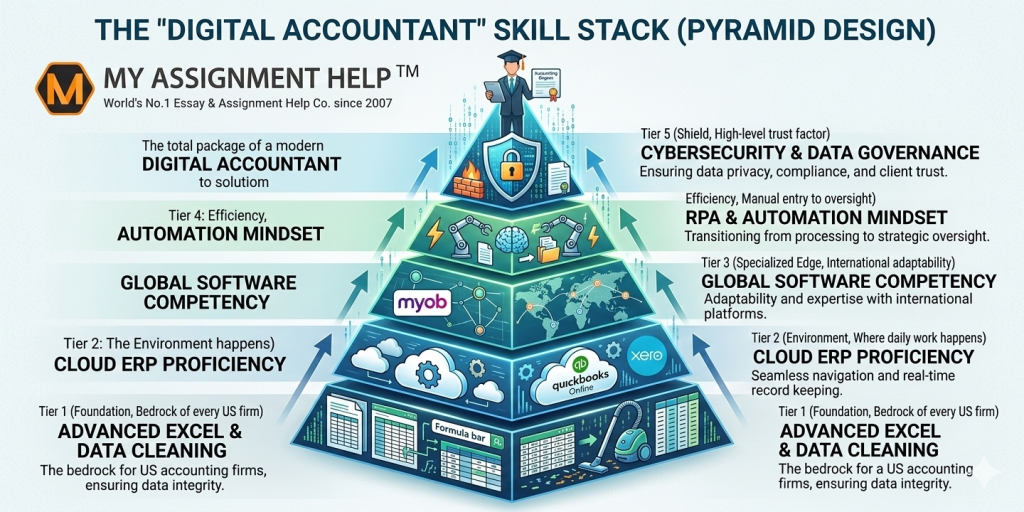
Excel remains a cornerstone of accounting. While basic skills are essential, US firms are looking for candidates who can leverage its full potential. This includes proficiency in:
- PivotTables and PivotCharts: Essential for organizing, summarizing, and visualizing large datasets.
- VLOOKUP and HLOOKUP: Critical for data manipulation and merging information from multiple sheets.
- Logical Functions (IF, AND, OR): Key for creating dynamic formulas and automating processes.
- Financial Modeling: Creating robust models for budgeting, forecasting, and scenario analysis.
- Data Visualization: Presenting complex financial data in a clear and compelling manner.
According to a recent Robert Half Salary Guide, advanced Excel skills are among the most sought-after competencies by hiring managers in accounting and finance.
2. Cloud Accounting and ERP Systems
The adoption of cloud-based accounting software and Enterprise Resource Planning (ERP) systems is rapidly increasing. Firms need professionals who are familiar with popular platforms such as:
- QuickBooks Online: Widely used by small to mid-sized businesses.
- Xero: Another popular cloud-based option known for its user-friendly interface.
- Sage Intacct: A leading cloud ERP solution for growing businesses.
- NetSuite: A comprehensive cloud ERP suite for larger organizations.
Understanding how to use these systems efficiently, troubleshoot common issues, and generate accurate financial reports is crucial.
3. Understanding MYOB and its Application
For those with international accounting aspirations, particularly in countries like Australia and New Zealand, a solid understanding of Mind Your Own Business (MYOB) software can be advantageous. While less common in the US, some multinational firms or those with diverse clients may require MYOB expertise.
However, if you’re navigating complex academic assignments involving MYOB, seeking expert assistance can be a wise move. Our specialized MYOB assignment help service is designed to support students and professionals facing challenges with this software, ensuring accurate results and a deeper understanding of its functionalities. This practical experience, combined with an understanding of US accounting principles, can create a unique and valuable skill set.
4. Robotic Process Automation (RPA) in Accounting
RPA is transforming the accounting industry by automating repetitive, rule-based tasks such as data entry, accounts payable processing, and bank reconciliations. While you may not need to be a developer, understanding how RPA works and its implications for accounting processes is becoming increasingly important. Firms are looking for accountants who can:
- Identify Automation Opportunities: Recognize manual tasks that can be automated to improve efficiency.
- Design and Monitor RPA Bots: Collaborate with developers to create and manage software bots.
- Integrate RPA into Existing Workflows: Ensure seamless integration of automated processes with existing accounting systems.
The American Institute of Certified Public Accountants (AICPA) emphasizes the growing relevance of RPA in accounting and the need for professionals to understand its impact.
5. Cybersecurity Awareness and Risk Management
With the increasing reliance on digital technologies, protecting sensitive financial data is a top priority for US accounting firms. Accountants need a strong understanding of cybersecurity principles and risk management strategies. This includes:
- Recognizing Phishing Attacks: Identifying and avoiding common online threats.
- Implementing Strong Password Policies: Using robust passwords and multi-factor authentication.
- Understanding Data Privacy Regulations: Adhering to laws like the California Consumer Privacy Act (CCPA) and the Health Insurance Portability and Accountability Act (HIPAA).
- Mitigating Third-Party Risks: Assessing the security posture of vendors and software providers.
The Association of International Certified Professional Accountants (AICPA & CIMA) highlights the critical role of cybersecurity in accounting and finance.
Facing an Urgent Accounting Deadline? We Can Help!
We understand the pressure of tight deadlines and complex accounting concepts. Whether you’re struggling with Excel formulas, a challenging MYOB assignment, or need assistance with data analytics, our team of experienced accounting experts is here to support you. We offer urgent assignment help tailored to your specific needs, ensuring high-quality work and timely submissions. Don’t let assignments hold you back – get the help you need today!
Key Takeaways
- Excel remains king, but advanced skills are essential. Go beyond the basics to master PivotTables, data modeling, and advanced formulas.
- Cloud accounting and ERP systems are the future. Gain proficiency in QuickBooks Online, Xero, or other popular platforms.
- RPA is transforming accounting. Understand the basics of automation and its potential applications.
- Data analytics is a game-changer. Learn how to extract, analyze, and interpret financial data to provide strategic insights.
- Cybersecurity is a non-negotiable skill. Stay informed about online threats and best practices for protecting financial data.
FAQs
Q: Do I need a CPA to work in a US accounting firm?
A: While a Certified Public Accountant (CPA) designation is highly regarded and often required for specific roles, it’s not always a prerequisite for entry-level positions. However, a CPA can significantly enhance your career prospects and earning potential.
Q: How can I gain these technical skills?
A: You can develop these skills through coursework, online certifications, hands-on experience, and continuous learning. Many accounting software providers offer certification programs, and there are countless online resources and tutorials available.
Q: Are accounting firms willing to train employees in these skills?
A: Many firms provide training and professional development opportunities to help their employees upskill. However, having a foundation in these key technical areas will make you a more competitive candidate during the hiring process.
Q: How do these skills help me advance my accounting career?
A: By mastering these technical skills, you can demonstrate your value to potential employers, improve your efficiency, provide more strategic insights, and open doors to advanced roles with greater responsibility and compensation.
Author’s Bio
Mark is an educator at MyAssignmentHelp is a dedicated expert at , specializing in providing comprehensive academic support to accounting students. With a strong background in accounting principles and a passion for helping others succeed, Mark offers guidance on a wide range of topics, including financial reporting, auditing, taxation, and advanced accounting software like MYOB. Mark is committed to delivering high-quality, personalized assistance to empower students to achieve their academic goals.
By developing these five crucial technical skills, you can position yourself for success in the ever-evolving world of US accounting. Embrace continuous learning, stay ahead of industry trends, and you’ll be well on your way to a rewarding and fulfilling career.
Core Industry Reports (General Trends)
- Robert Half 2026 Salary Guide:
- Context: Use this to back up the claim that 87% of finance leaders offer higher pay to candidates with specialized technical skills.
- Source: Robert Half 2026 Salary Guide: Finance & Accounting Trends
- PwC 2026 Global Digital Trust Insights:
- Context: Supports the urgent need for cybersecurity skills as 60% of executives are increasing cyber risk investment this year.
- Source: PwC 2026 Global Digital Trust Insights Survey
Recommended References & Citations
- Robert Half (2026 Salary Guide):
- Data Point: 87% of finance and accounting leaders offer higher pay for candidates with specialized skills like data analytics and ERP expertise.
- Source: https://www.roberthalf.com/us/en/insights/research/finance-and-accounting-salary-trends
- AICPA & CIMA (Professional Insights):
- Data Point: The shift toward “Tax Technologists” and the integration of AI/RPA as a data engineering discipline rather than just manual entry.
- Source: https://www.aicpa-cima.com/professional-insights/download/2023-trends-report
- U.S. Bureau of Labor Statistics (BLS):
- Data Point: Employment for accountants and auditors is projected to grow 5% through 2034, with an emphasis on analytical and critical-thinking skills.
- Source: https://www.bls.gov/ooh/business-and-financial/accountants-and-auditors.htm
- ICAEW / 1Office Research:
- Data Point: Up to 77% of routine accounting tasks are expected to be automated by 2026, shifting the role toward strategic advisory.
- Source: https://www.icaew.com/insights/viewpoints-on-the-news/2026/jan-2026/seven-in-demand-skills-and-roles-in-accounting-firms
- GoSkills (2026 Employer Trends):
- Data Point: Advanced Excel proficiency (PivotTables, Power Query, and Data Modeling) remains the #1 requested technical skill in 2026 job postings.
- Source: https://www.goskills.com/Excel/Resources/Excel-skills-employers-looking-for